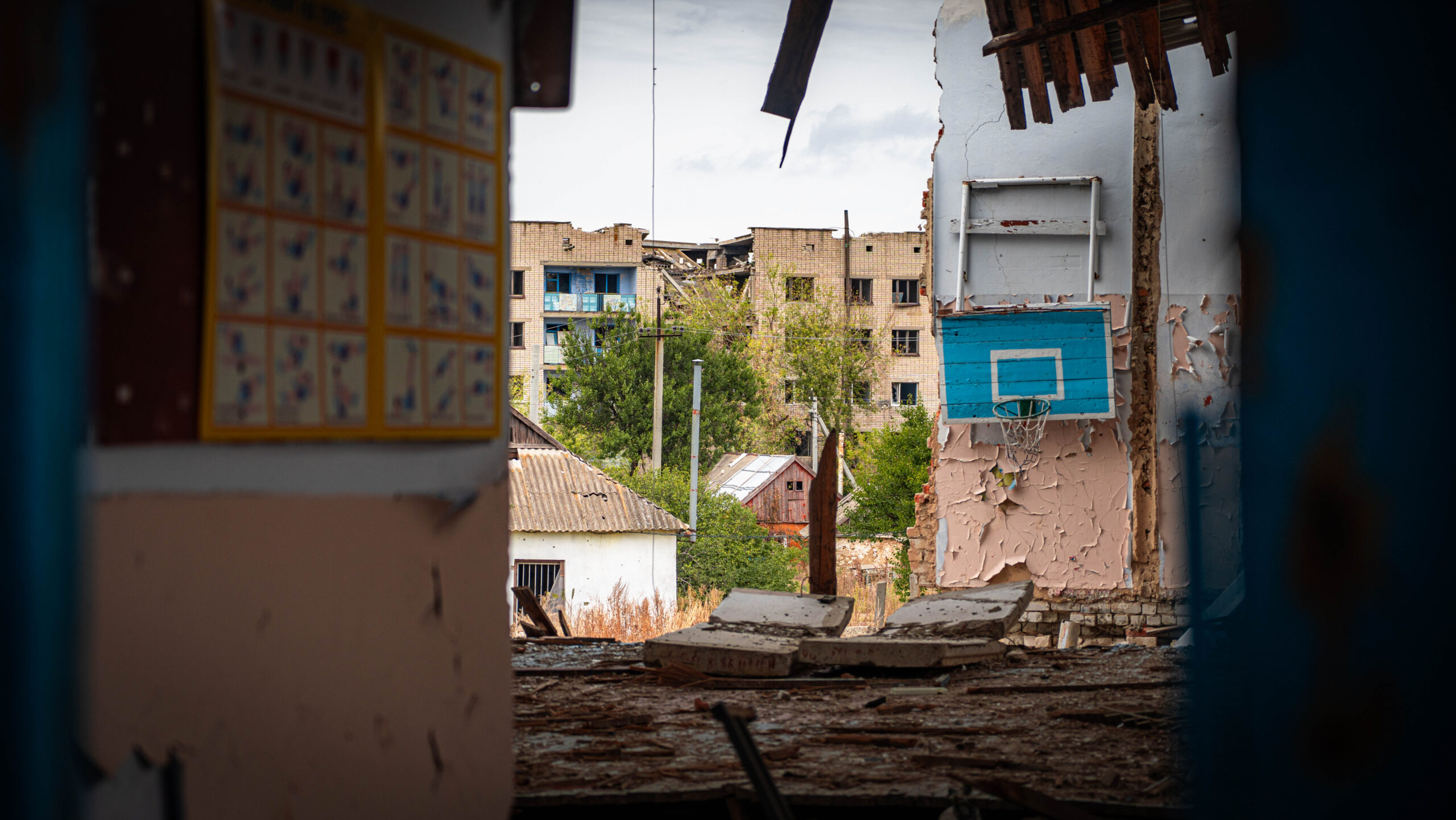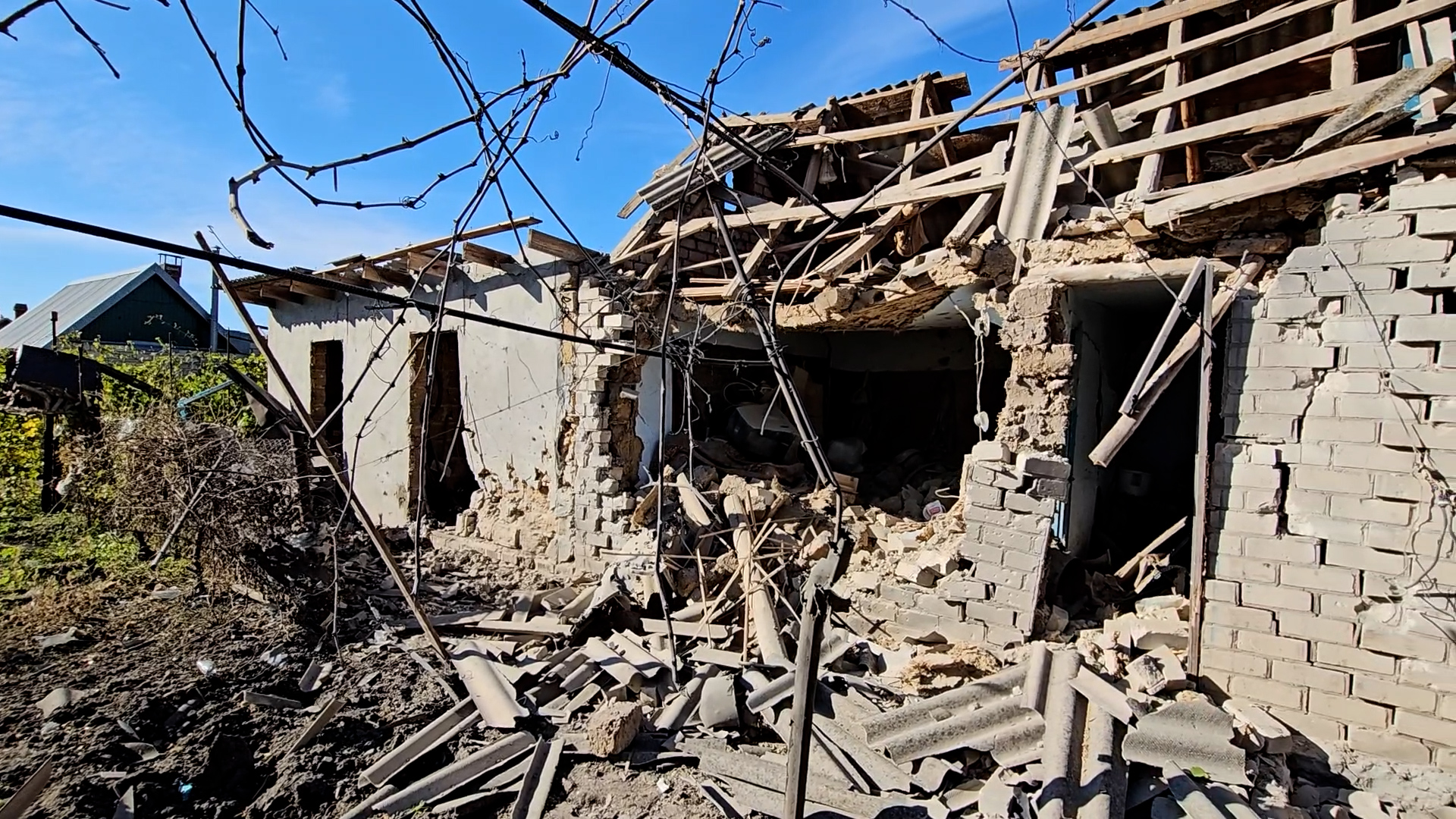


On October 29, the delegation from the Kherson region participated in the 49th Session of the Congress of Local and Regional Authorities of the Council of Europe, where it presented wartime practices of civil-military administration developed under wartime conditions.
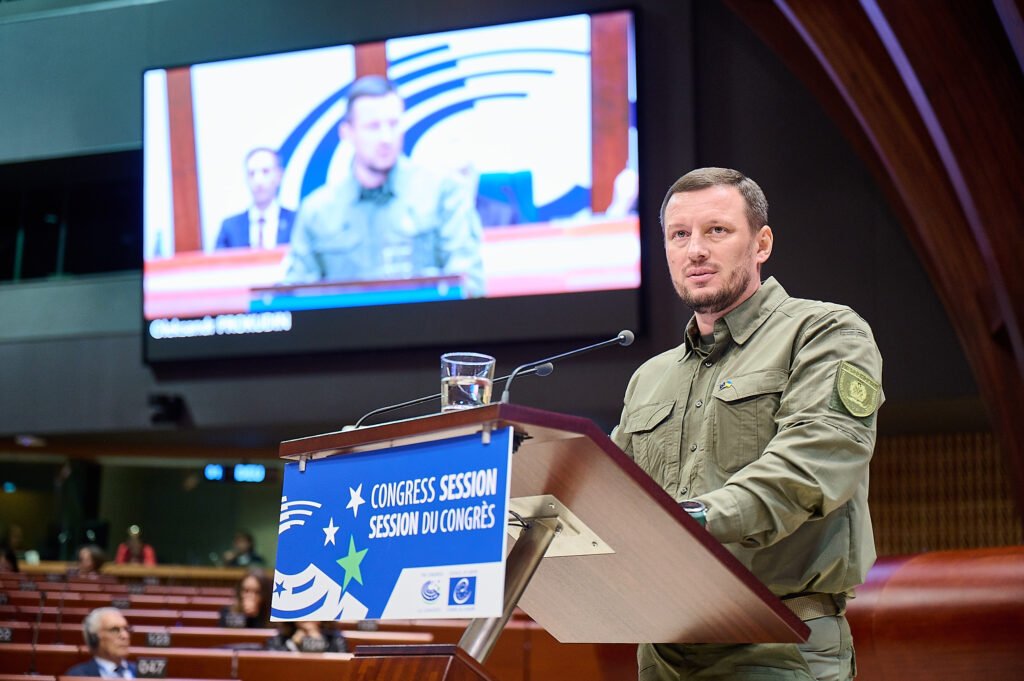
During his speech, the Head of the Kherson Regional Military Administration, Oleksandr Prokudin, introduced the program “Civil-Military Administration in the Conditions of Modern War” — an initiative aimed at sharing the region’s experience with European partners, which may prove useful in crisis situations.
“This is not theory but lessons tested by daily reality under shelling. We had to create this manual on our own — through losses, risks, and mistakes, paying a high price for every step,” said Oleksandr Prokudin. “If we had such recommendations back in 2022, things might have been different — but at that time, no one told us what to do.”
He also shared specific solutions that enable the region to function despite constant threats — from multi-level countermeasures against drones to the organization of evacuations, the construction of underground schools and hospitals, and large-scale demining of territories.
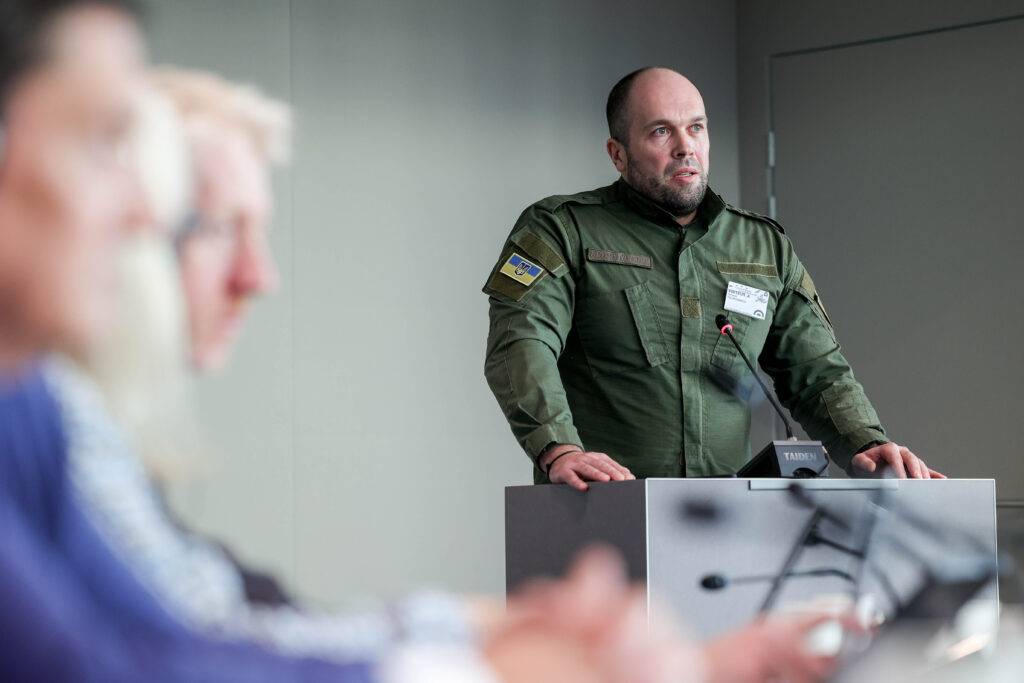
The Deputy Head of the Kherson Regional Military Administration, Oleksandr Tolokonnikov, drew attention to the humanitarian consequences of the occupation of part of the region — including systematic repressions, forced Russification, restrictions on leaving the occupied territories, as well as documented cases of the illegal deportation of Ukrainian children by Russian occupiers.
“I want to speak frankly — what we see there now is Stalinism flourishing. We witness the same repressions, coercion, and torture that once existed in the Soviet Union. It is a global dictatorship, a total censorship of all information resources, and even the suppression of the ability to communicate with relatives,” emphasized Oleksandr Tolokonnikov. “And unfortunately, people in the occupied territories have started to get used to the occupiers — to the fact that they can only watch Russian propaganda channels, that they must hide their devices, hide their lives, hide their pro-Ukrainian stance. They cannot leave the occupied areas because they are restricted in their right to sell their homes and move away.”
The delegation also proposed institutionalizing the exchange of practices by creating an international platform. This dedicated working group would focus on adapting Ukraine’s experience to EU and NATO standards, with the long-term goal of developing it into a European Civil Protection Center based on Ukraine’s experience.
“We want our pain to have meaning. We want our lessons to save lives. I invite the partners of the Council of Europe to join this initiative, to learn together, and to strengthen the resilience of all of Europe together. Let’s turn this experience into strength. Let’s build a Europe where no region has to learn the way we did,” concluded Oleksandr Prokudin.
Information provided by the Kherson Regional Military Administration